
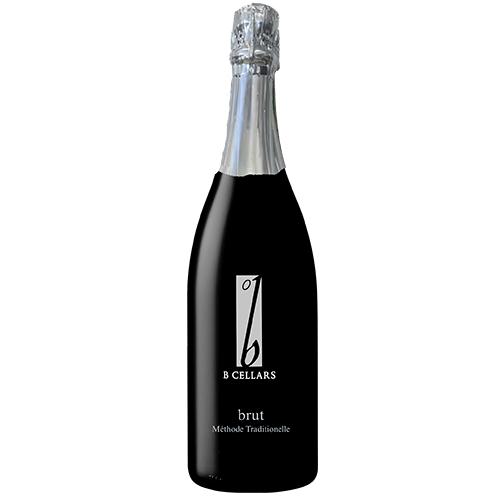
2022 Brut

Our second vintage of sparkling wine is composed of 75% Pinot Noir for depth and roundness and 25% Chardonnay for added structure. The gently pressed grapes were co-fermented in a combination of neutral French Oak barrels and stainless steel.

This Brut was made in the traditional method, where the wine undergoes secondary fermentation in bottle. The process begins with the addition of a liqueur de tirage (a wine solution of sugar and yeast), triggering a secondary fermentation inside the bottle, which produces both carbon dioxide and yeast cells, or lees. Our sparkling wine went through a 36-month tirage (time on the lees). The yeast cells are collected in the neck of the bottle during the riddling process, which rotates and tilts the bottles. After the yeast has settled in the neck of the bottle, the lees is disgorged from the bottle and can be finished with a small dosage. Then the sparkling wine is corked, caged, and foiled and is finally ready to be enjoyed in the home!

Our inaugural Brut release gave us the opportunity to explore three distinct expressions of sparkling wine. One spent 30 months on the lees and received a small dosage after disgorgement. Our Extra Brut shared the same tirage time but received no dosage, resulting in a crisp, bone-dry style. The final bottling was aged for an additional six months, allowing us to experience firsthand the impact of extended lees aging.

Each expression was compelling in its own way, but the experience helped clarify the style of sparkling wine that feels most at home within the B Cellars portfolio. For this second vintage, we chose 36 months of tirage and no dosage, bringing together richness and precision.

The result is a sparkling wine of remarkable depth and dimension. It is rich and generous on the palate, with luxurious notes of brioche and a layered complexity that could only come from time, patience, and thoughtful craftsmanship.
2022 Brut

2022 Brut

A beautiful golden hue with inviting aromas of baked apple and poached pear. The palate is beautifully balanced with notes of white peach, hazelnut, and freshly baked brioche. The Extended tirage lends greater depth and weight to the mid-palate, enhancing the wine’s creamy texture and creating a rich, luxurious mouthfeel.

Sparkling Wine Terms

The base wine is bottled in a very particular manner: in each individual bottle, an additional dose of yeast and sugar is added, and then the bottle is capped with a “crown cap.”  (For “crown cap,” think of a bottle of beer or soda.)  This in-bottle fermentation produces some very important characteristics of the final wine.  First, it increases the alcohol content because live yeast converts sugars into ethyl alcohol.  (Yeh!).

Second, the carbon dioxide (CO2) produced by this fermentation is “captured” because the crown cap seals each bottle.  So, the CO2 goes into suspension, pressurizing the bottle—this is what makes it a sparkling wine!  Finally, after the fermentation is complete, the yeast cells die off due to a lack of food and produce lees.  Lees is simply the French word for dead yeast cells.  During tirage the wine is being aged sur lees, or “on the lees” and these yeasts are adding flavors, textures, and aromas to the finished wine.

The tirage period for the 2022 Brut is 36 months.

During tirage, the wine in the bottle is cloudy with the lees.  In order to bottle a wine that is clear, visually as well as one with a crisp mouth feel and presentation on the palate, we must first remove the lees.  To do this, the bottles are stacked in a rack, more or less horizontally.  Over time, the bottles are agitated and turned, while at the same time, the angle of the bottle in the rack is increased.  The bottles move, during riddling, from a horizontal position to a neck-down, vertical position.  This agitation and movement sends the lees down into the neck of the bottle, forming a disc against the cap.

Traditionally, riddling was done in wooden racks by hand, bottle by bottle.  Today, the process can also be accomplished using a very clever mechanical system.  Bottles are loaded into cages which are then suspended, shaken, and turned over and over again to accomplish the same movement of lees into a disc against the cap.  Either way, this process is incredibly precise, demanding, and time consuming.

After riddling, the wines are crysal clear, but the lees are still in the bottle, nestled in a disc against the cap.  For the next step, the bottles are positioned neck-down in a very cold glycol solution which freezes the lees.  Specialized bottling line equipment then flips each bottle up and removes the crown cap.  The pressure inside the bottle, from the CO2, blows the lees cap out along with a very small (less than half an ounce) of the wine.

Immediately following the disgorging, a small amount of liquid is replaced in each bottle.  This liquid is comprised of wine and a small amount of sugar in solution.  This is called the dosage.  The dosage serves two main functions. First, it replaces any liquid lost during the disgorging, so that each bottle contains the correct volume of wine (typically 750ml).  Second, it is a tool for the winemaker to make small, incremental changes or additions to the wine.

For high-quality, brut (i.e., dry, not sweet) sparkling wines, the winemaker may choose to add a very small amount of sugar, usually an amount so small that most human palates cannot actually taste it as “sweet.”  Rather, this small addition of sugar will simply add a balance to the bracing acidity of a good sparkling wine and will add some smoothness and texture to the mouthfeel.  Immediately after the dosage addition, the wine is corked, with a sparkling wine natural cork.  Then the cage and foil are added, and the wine is, essentially, finished.

For our 2022 B Cellar Brut, we used a dosage of zero additional sugar, known as a brut nature.